
5 Key Differences Between SEO for Construction Websites and Other Websites

Search engine optimization follows many of the same technical rules across industries. Yet SEO for construction companies requires a different commercial strategy from SEO for retail, news, education or general professional services. Buyers need evidence of completed work, location-specific expertise, sound technical information and a trustworthy route to making an enquiry.
Whether you manage a contracting company, architecture practice, property-development business or building-materials supplier, getting more traffic is not enough. A construction website needs to attract qualified visitors: people looking for the right service, in a location you actually serve, with a project that fits your capabilities.
In this updated guide, Reza Hojati explains five differences that should shape a construction SEO strategy in 2026. The recommendations use practical scenarios from the Iranian market while distinguishing approaches that apply in other countries. Each section includes specific actions, measurement ideas and guidance consistent with current Google documentation.
Construction SEO vs. General Website SEO: The Five Differences at a Glance
| Strategic area | Typical general website priority | Construction website priority | Evidence of success |
|---|---|---|---|
| Local intent | Broad audience reach | Service-area relevance and genuine local project experience | Relevant local enquiries and booked consultations |
| Content format | Articles or product descriptions | Project case studies, actual photographs, technical details and video | Portfolio engagement and qualified enquiries |
| Keywords | High-volume category terms | Service + project type + location + buying stage | Lead quality by landing page and query theme |
| Trust | General brand recognition | Verifiable expertise, credentials, contracts and real outcomes | Consultation and proposal acceptance rates |
| Seasonality | Fixed annual content calendar | Regional demand patterns and project lead times | Seasonally adjusted conversion and pipeline trends |
1. Local SEO Is Central to Many Construction Services—but the Country Matters
A customer searching for “home renovation in Saadat Abad” or “building contractor in Tehranpars” is typically more geographically specific than someone searching for general construction advice. Travel distance, permits, local suppliers and previous work in that area can all influence the choice of contractor. For an architecture firm with international clients or a national building-materials distributor, however, the market can be much wider. Locality should follow the business model rather than an invented rule that a fixed percentage of traffic must be local.
Google says that local business results are influenced by relevance, distance and prominence. In supported countries, a well-maintained Google Business Profile can help eligible businesses manage their local presence. Google’s local ranking guidance explains the principles.
Important distinction for businesses operating in Iran
As of November 2026, Google Business Profile does not support businesses located in Iran, according to Google’s list of supported countries and regions. Therefore, telling an Iranian construction company to create or fully optimise a Business Profile is not a workable universal recommendation.
For Iranian businesses, prioritise an indexable website, accurate contact and service-area information, genuinely useful location pages, real project evidence, and reputable local discovery platforms relevant to the audience. Do not confuse an existing map listing with an officially supported and manageable Business Profile.
How to build local relevance without manufacturing location pages
- Describe where the business operates, including whether you work on site, serve nearby cities or deliver building materials beyond the city.
- Create a substantial area page only when it adds unique value: completed local projects, transport constraints, permitting context, area-specific services, pricing variables or a relevant local team.
- Keep the business name, public address and contact number accurate on the company website and reputable directories; avoid buying hundreds of low-value listings.
- Collect authentic feedback with permission. Never request only five-star ratings, pay for positive reviews or submit fabricated testimonials.
- Measure actual calls, form submissions and qualified leads from area pages, not merely the number of URLs indexed.
Copying the same page fifty times while switching the district name can create a doorway-page problem. Google’s spam policies describe why pages built mainly to capture similar search queries may violate its rules.

Practical example: A renovation firm that has completed kitchens in Tehranpars and Narmak could create two useful local case studies, link them to a broader renovation service page and show site photographs, budgets as appropriately qualified ranges, scope and project constraints.
2. Construction SEO Needs Visual, Project-Based Proof—not Text Alone
A detailed article can answer questions about building standards or material selection. But for someone selecting an architect or contractor, a portfolio often supplies evidence that prose cannot. Photos of completed work show workmanship; before-and-after comparisons explain the transformation; annotated drawings clarify design decisions; and short videos can demonstrate difficult stages of execution.
The right amount of imagery depends on the project. A small kitchen refurbishment may need a carefully edited collection of eight useful photographs. A complex commercial build may justify many more images, drawings and walkthroughs. There is no Google requirement to upload 40–50 images or use 4K photography on every project page. Relevance, authenticity, accessibility and loading performance matter more than a fixed count.
What a genuinely useful project page should contain
- A descriptive project name and an honest indication of whether it is completed, in progress or a design concept.
- Location at an appropriate level of precision, project type, scope of work, floor area and timeline where disclosure is permitted.
- Real photographs, meaningful captions, before-and-after comparisons and drawings when they contribute to understanding.
- Technical challenges and how they were addressed, reviewed by an appropriately qualified professional.
- A contextual call to action: request a similar project consultation, specifications or a quote.
Google’s image SEO guidance recommends relevant surrounding text, descriptive image alternatives and images that can be discovered and fetched. Write alt text to describe the picture naturally—for example, “Completed modern kitchen renovation with oak cabinets in Zafaraniyeh”—rather than repeating the city and keyword several times.
Publish videos where they genuinely help. Provide a clear title, a descriptive page, accessible playback, captions when practical and a video thumbnail. Google documents video indexing and eligibility in its video SEO best practices and VideoObject structured-data guide. Use VideoObject only when the page actually contains the matching video and all required information; do not assume a generic “Project” or “ImageGallery” label guarantees a special search result.

Technical visual SEO checklist
Use responsive images and modern formats where supported; reserve image dimensions to reduce layout shifts; lazy-load noncritical media; avoid lazy-loading a critical hero image; link to project detail pages with descriptive anchor text; and assess real-user performance with Core Web Vitals.
3. Long-Tail Keywords Must Match the Project, Location and Buying Stage
Construction search terms often include more purchasing context than broad informational terms. Compare “home renovation” with “100 m² apartment renovation cost in east Tehran.” The second query indicates a particular need and a location, but it does not mean the searcher will necessarily sign a contract this week. A strong SEO strategy addresses all relevant stages, from early research to supplier comparison and consultation.
Rather than relying on unverified monthly search-volume numbers or extraordinary conversion percentages, build a keyword map using first-party data from Google Search Console, search-result analysis, customer questions and any compliant keyword-research tools available in your market.
| Example query | Likely intent | Best page or asset | Suggested conversion action |
|---|---|---|---|
| How much does villa construction cost? | Research and budgeting | Cost breakdown with assumptions and update date | Request a project budget review |
| Villa contractor in Lavasan | Local provider comparison | Villa construction service + genuine Lavasan projects | Book an initial consultation |
| Apartment renovation in Saadat Abad | Location-specific service | Renovation page with area case studies | Request a site visit or quote |
| Ready-mix concrete technical specifications | Technical product evaluation | Specification page, standards and downloadable sheet | Ask for product availability |
| Structural steel supplier in Tehran | Commercial procurement | Supplier page, grades, delivery terms and contact details | Request a quotation |
Map one distinct search need to one genuinely useful page
Organise pages into clear groups: services, areas served, project case studies, product categories and practical guides. An article about “villa construction costs” should link to the villa service page and relevant project examples; the service page can link to the cost guide and a direct enquiry form. This helps visitors navigate and allows search engines to discover related pages.
A URL such as /areas/tehranpars-renovation/ is appropriate only when there is a real reason for that distinct page. Do not publish dozens of near-identical landing pages solely to swap city names. Google explicitly addresses search-manipulative scaled content and doorway abuse in its spam policies.

4. Trust, Demonstrated Expertise and Accountability Matter More in High-Stakes Projects
Construction decisions can affect considerable budgets, contractual obligations and physical safety. That is why visitors need to know who is responsible for the work, what qualifications are relevant, and whether claims about completed projects can be substantiated. A polished homepage without real evidence is a weak substitute for a documented track record.
Google’s framework of E-E-A-T—Experience, Expertise, Authoritativeness and Trustworthiness—is a useful way to review the credibility of content. However, Google clarifies that E-E-A-T is not a single, separately measured ranking factor. Publishing a 3,000-word About Us page or displaying an engineering certificate does not automatically improve rankings.
| Evidence category | Construction website example | Why it helps the buyer |
|---|---|---|
| First-hand experience | Documented projects, dated site photos and decisions explained | Shows relevant work has actually been undertaken |
| Professional expertise | Technical articles reviewed by named, suitably qualified professionals | Helps readers judge technical reliability |
| Accountability | Company registration, verifiable licences where applicable, accurate contacts | Makes the provider identifiable and checkable |
| Transparency | Clear scope, exclusions, assumptions, warranty and revision policies | Reduces uncertainty before a meeting or contract |
| Independent validation | Permission-based client references and legitimate editorial mentions | Provides evidence beyond self-promotion |
Build trust into the entire customer journey
- Publish an About page with the company’s actual history, services and responsible people. The appropriate length is whatever is needed to answer customer questions.
- Identify expert reviewers of technical content when appropriate, without posting confidential identification or licence data without permission.
- Describe the standards used in a project accurately; do not list ASTM, DIN or other standards unless they genuinely apply.
- Ask clients for truthful accounts of their experience, get consent before using names and pictures, and distinguish customer opinions from independently verified results.
- Earn relevant mentions or links through useful case studies, expert collaborations and legitimate industry publications—not purchased government-domain links.

Clear, people-first explanations also remain important in AI-enhanced search. Google’s guide to generative AI features in Search says the same fundamental search quality and SEO practices continue to apply to AI Overviews and AI Mode; no special markup or guaranteed inclusion method is required.
5. Construction Demand Is Often Seasonal, but the Pattern Must Be Proven with Data
Weather, budgets, permitting, holidays, financing and local construction cycles can affect when prospects research and commission projects. A villa builder in northern Iran may see a different pattern from an elevator supplier, an architect serving international clients or a commercial refurbishment contractor. It is misleading to claim that all construction searches rise four- or fivefold in spring or decline by exactly 70% during certain months.
Instead, look for repeatable patterns in your own business. Compare two or more years when possible, and use Google Trends to explore relative interest by region and period. Trends is a relative index—not a count of monthly searches or a prediction of sales. Combine it with Search Console traffic, quote requests, contract dates, sales cycle lengths and operating capacity.
| Demand signal | What to examine | Practical content action |
|---|---|---|
| Interest begins rising | Search trends and early quote enquiries | Refresh service pages, costs and regional project examples before peak demand |
| Consultations accelerate | Qualified lead volume and site-visit bookings | Make contact actions clear; publish answers to objections and procurement concerns |
| Project work is busiest | Available capacity, response times and conversion rates | Keep project availability honest and document useful case studies |
| Demand softens | Lead-to-contract rates and recurring search themes | Improve technical content, site performance and portfolio quality |
Publish material far enough ahead to be discovered and reviewed, but avoid a fixed promise that Google always takes two to three months to rank it. Crawl and ranking timelines vary. During a slower period, updating cost guides and detailed project pages may be more useful than multiplying thin articles. In supported locations, paid campaigns can complement organic search, but budgets should follow measured economics, not an automatic three- or fourfold seasonal increase.
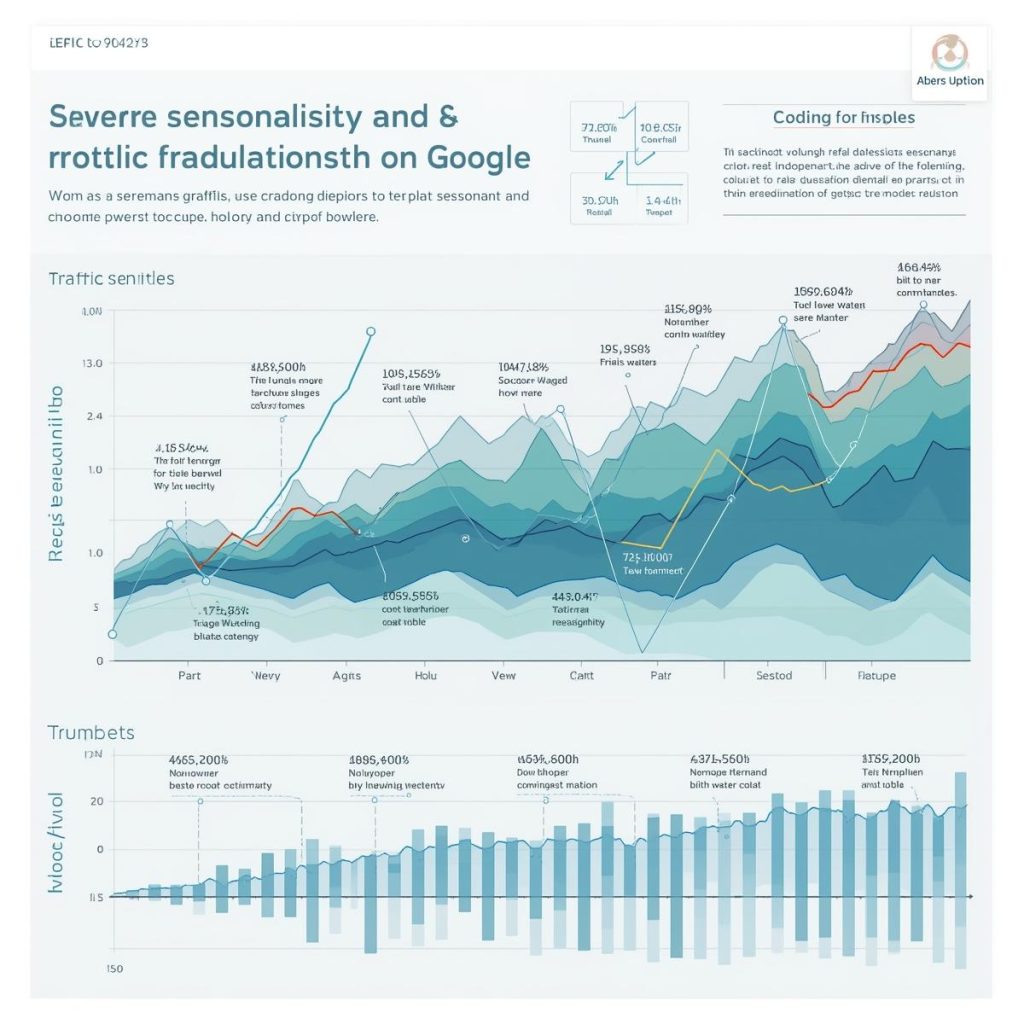
Infographic: How Construction SEO Turns Searches into Qualified Project Enquiries
From local search to a measurable business outcome
This process illustrates the commercial purpose of the five SEO differences.
A Practical 90-Day Construction SEO Implementation Plan
An initial 90-day plan helps establish the foundation. It should be treated as a work programme, not a promise that rankings or revenue will improve within a particular period.
| Period | Core work | Deliverables |
|---|---|---|
| Days 1–30 | Audit technical SEO, mobile performance, index coverage and lead tracking. Interview customers and sales staff. | Baseline dashboard, mapped services and locations, prioritised keyword and page plan. |
| Days 31–60 | Improve key service pages, develop real project case studies and create useful internal links. Fix major image and UX issues. | Updated commercial landing pages, authentic portfolio assets and streamlined enquiry forms. |
| Days 61–90 | Publish supporting guides, assess local performance, refine calls to action and review lead quality with the sales team. | Reporting cadence, content calendar based on seasonal signals and next-quarter experiment backlog. |
Metrics worth tracking
| KPI | Meaning | Typical source |
|---|---|---|
| Organic search visibility | Impressions and clicks for relevant queries and pages | Google Search Console |
| Qualified enquiry rate | Enquiries meeting defined project criteria ÷ relevant sessions | Analytics + CRM |
| Consultation-to-proposal rate | Proposals sent ÷ completed consultations | CRM / sales team |
| Proposal-to-contract rate | Signed contracts ÷ proposals issued | CRM / contracts |
| Performance and usability | Real-user loading, interaction and layout stability | Core Web Vitals + field performance data |
Construction SEO checklist
- Identify the services and areas actually served.
- Review Search Console indexing and existing search queries.
- Update the strongest service and portfolio pages first.
- Document genuine completed projects with usable photos.
- Ensure each image has context and appropriate alt text.
- Publish named expert reviews where technical accuracy matters.
- Separate informational guides from commercial service pages.
- Avoid duplicate location pages and manufactured reviews.
- Track qualified leads through proposals and contracts.
- Adjust seasonal plans using actual search and sales data.
Frequently Asked Questions About Construction SEO in 2026
Is local SEO always the most important strategy for a construction business?
No. Local SEO is particularly important to firms that serve defined geographic markets, such as renovation contractors or site-based service providers. National distributors, technical consultants and firms working internationally may need broader topic and industry targeting as well.
Can a construction company in Iran optimise a Google Business Profile?
Google’s supported-countries documentation currently lists Iran as unsupported for Business Profile. Iranian firms should emphasise their own website, useful regional case studies and legitimate local discovery channels rather than relying on an unavailable profile feature.
How many photos should each construction project page contain?
There is no universal Google minimum. Include the images necessary to explain the work well, avoid repetition and optimise their delivery. A smaller gallery of authentic, descriptive photos can be more useful than dozens of generic or slow-loading images.
Does E-E-A-T guarantee first-page rankings?
No. E-E-A-T is a useful framework for evaluating credibility, not an isolated Google ranking score or a guaranteed path to any position. Search results depend on the query, competition, relevance, content and numerous other factors.
How soon will construction SEO generate contracts?
There is no fixed timeline. Technical improvements, ranking changes, buyer decision cycles and a firm’s ability to convert enquiries all vary. Establish baselines, improve high-value pages and track business outcomes over multiple reporting periods.
Conclusion: Build an SEO Strategy Around Real Construction Buyers
Construction website SEO and digital marketing work best when they connect a real buyer question with convincing evidence and a simple next step. The five important distinctions—local relevance, project-based media, intent-driven keywords, demonstrated trust and data-led seasonality—provide a practical framework for building that connection.
A professional construction website should help people evaluate a team, understand whether it has delivered similar work, and decide whether to request a consultation. Make those decisions easier, keep claims verifiable and measure the quality of the resulting business opportunities. Sustainable SEO is the outcome of useful work performed consistently—not a fixed number of directory listings, images, words or months.
References and Further Reading
The following official resources informed the 2026 revisions and provide practical instructions for implementation.
- Google Search Central — Creating helpful, reliable, people-first content.
- Google Business Profile — Supported countries and regions.
- Google Business Profile — Improving local rankings.
- Google Search Central — Image SEO best practices.
- Google Search Central — Video SEO best practices.
- Google Search Central — Video structured data.
- Google Search Central — Spam policies, including doorway abuse.
- Google Search Central — Core Web Vitals.
- Google Search Central — Optimising for generative AI features.
- Google Trends Help — Getting started.
- Google Search Console Help — Performance report.
Turn this thinking into a growth system for your construction business.
Connect SEO, web, lead generation, data and AI into one operating system.
Request a Consultation